
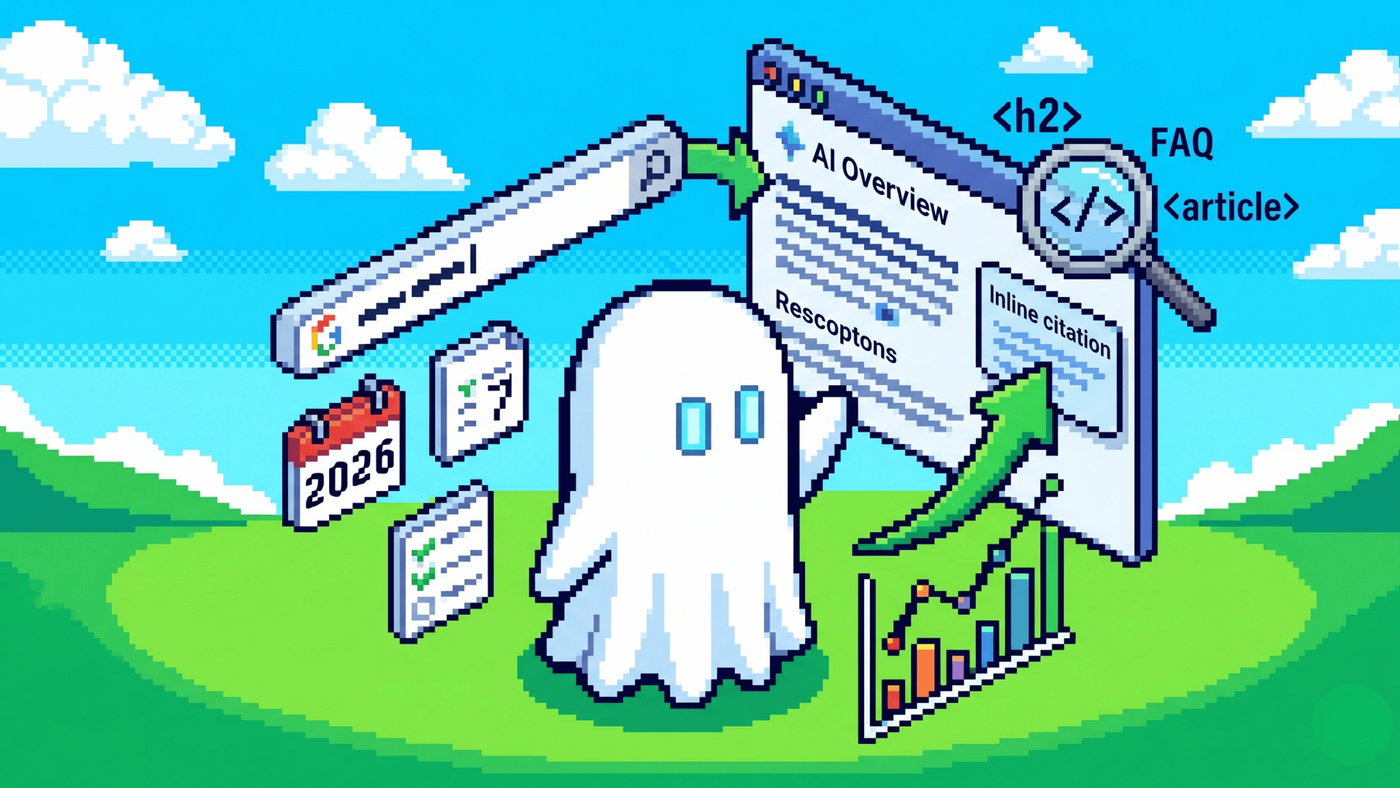
Google AI Mode is rewriting how search works and most blog SEO strategies haven't caught up. As of May 2026, AI Mode has crossed 1 billion monthly active users, and Google confirmed at I/O 2026 that AI Mode queries have more than doubled every quarter since launch. For bloggers and content marketers, this is a structural shift: position one organic CTR on queries where AI features appear has dropped from 27% to as low as 11%, according to SISTRIX. Zero-click searches now account for 58.5% of all US Google searches. The good news: brands cited inside AI Mode responses earn 35% more organic clicks than a standard top-three organic position. The challenge is learning how to earn that citation. This guide breaks down exactly how Google AI Mode works, what it means for your blog rankings, and the seven strategies that will help your content survive and thrive in the AI search era.
What Is Google AI Mode?
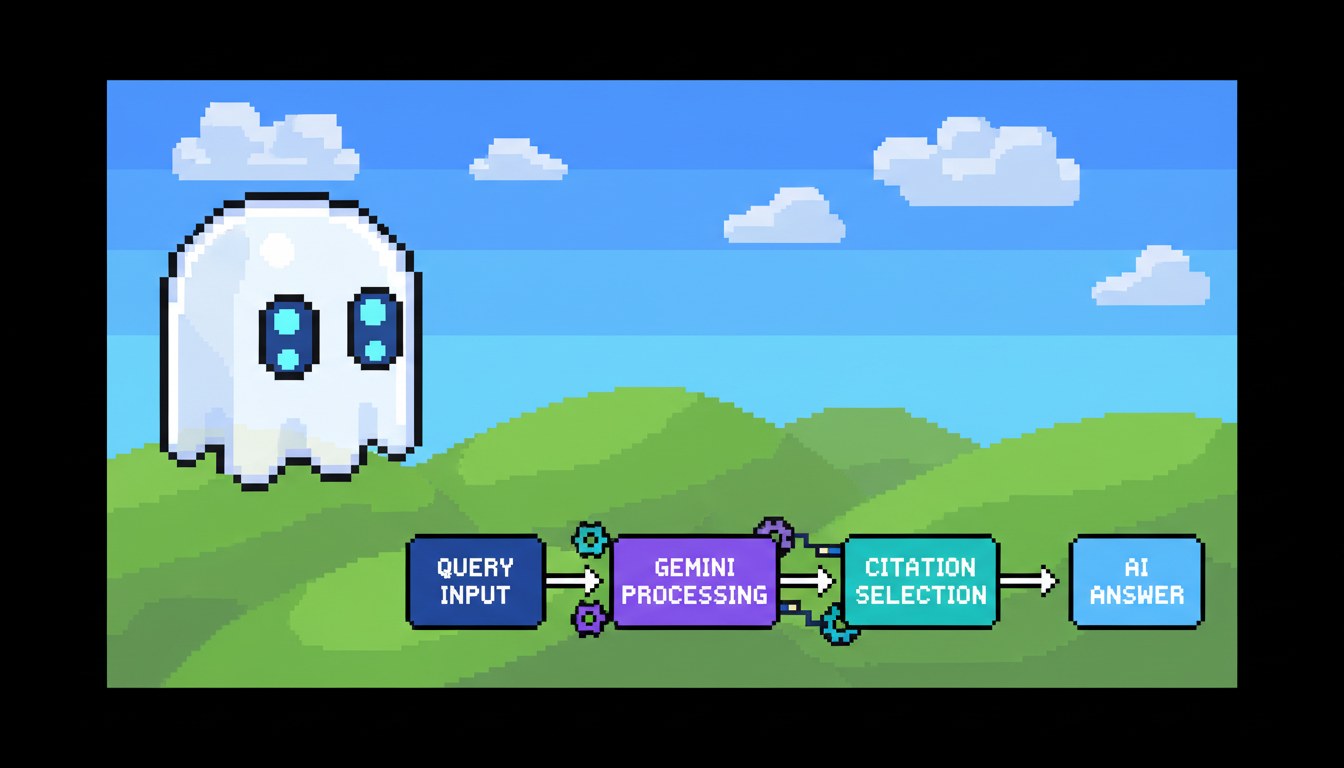
Google AI Mode is a conversational search experience powered by Gemini that generates synthesized, multi-step answers rather than returning a ranked list of blue links. Unlike AI Overviews, which appear as a brief summary box above traditional search results, AI Mode replaces the results page entirely with a Gemini-generated response, complete with inline citations, follow-up question prompts, and multimedia elements.
Launched in limited testing in 2024 and rolled out broadly in 2025, AI Mode crossed 1 billion monthly active users globally in May 2026. The average AI Mode query is three times longer than a traditional search, and follow-up queries within AI Mode rose more than 40% monthly in the US signaling that users are engaging with it as a deep research tool, not just a shortcut for simple questions.
At Google I/O 2026, Google announced that Gemini 3.5 Flash is now the default model powering AI Mode, bringing faster responses and improved multi-step reasoning. Google also unveiled two new ad formats for AI Mode Conversational Discovery ads and Highlighted Answers which means AI Mode is no longer an experiment; it is the new monetized core of Google Search.
Why AI Mode Is Changing SEO in 2026
Traditional SEO was built around one goal: rank in the top ten. But when AI Mode generates a synthesized answer, it selects 2–4 source citations not ten blue links. The competition is no longer for page one; it is for one of those citation slots.
AI Overviews, the predecessor feature, already proved the stakes. Ahrefs documented a 58% reduction in CTR for top-ranking pages when an AI Overview is present. With AI Mode going further replacing the results page entirely for a growing share of queries these dynamics will intensify through the second half of 2026.
For bloggers specifically, the most vulnerable content is informational how-to content. Topics like "what is X" and "how to do Y" have seen traffic declines of 30 40% as AI Mode absorbs those queries directly. That category covers the majority of a typical blog's highest-traffic pages. The flip side is that cited sources see traffic that converts at higher rates, because a user arriving via AI citation has already been pre-qualified by the AI's answer.
How AI Mode Affects Your Blog Traffic: The Numbers
The data every blogger needs heading into late 2026 tells two stories — one for cited sites, one for everyone else. According to SparkToro and Datos, 58.5% of US Google searches now end without a click. AI Overviews appear on 48% of all queries. Position one CTR in AI-present SERPs has collapsed from 27% to 11%. The Ahrefs February 2026 study confirmed a 58% CTR reduction for top-ranking pages when an Overview is present.
But sites cited inside AI Overviews earn 35% more organic clicks than a standard position-one result on the same query. Being named inside the AI response is now more commercially valuable than holding the top blue link below it. That single data point explains why citation optimization has become the defining SEO discipline of 2026.
Top 7 Strategies to Optimize for Google AI Mode SEO
- Lead with a direct answer. AI Mode rewards content that delivers the answer in the first 100–150 words. Gemini scans for the clearest, most direct response to surface in citations. If your introduction is a two-paragraph buildup before the point, AI Mode will find a source that gets there faster.
- Build topical depth, not individual pages. Google's citation logic favors sites that have demonstrated consistent authority across a topic cluster, not sites that published one well-optimized post. If you cover SEO, publish 10–15 interlinked posts on adjacent topics. Topical authority now outweighs individual page-level optimization.
- Use schema markup aggressively. FAQ schema, HowTo schema, and Article schema with author details all improve AI Mode citation probability. Structured data makes your content machine-readable which matters more when AI is the first reader of your page.
- Update content with dates and sourced statistics. AI Mode shows a strong preference for recently updated content with cited data. Adding a visible "Last updated" date and refreshing your key statistics every 60–90 days is now a meaningful signal for AI citation. Stale content gets routed around.
- Cite primary sources in your posts. When your post links to original research, data studies, or official documentation, Gemini treats your content as a curated resource rather than a generic summary. Linking out to the same high-authority sources that AI tends to cite places your content in the same credibility tier.
- Target conversational long-tail queries. AI Mode queries are three times longer than traditional searches. Content structured around natural-language questions "What's the best way to…", "How do I know if…" matches what AI Mode users type. Optimize your H2s and H3s as direct questions.
- Add credibility signals to your author profile. The May 2026 algorithm analysis identified firsthand experience narratives, credentialed author bios, and dated revision histories as differentiating citation factors. A named author with a bio and linked credentials consistently outperforms anonymous content on the same topic.
How to Get Your Blog Cited in AI Mode
Getting cited in AI Mode is the 2026 equivalent of hitting position one in 2022. The practical starting point is your existing top posts. Open Google Search Console and filter for pages ranking in positions 1–5 where CTR has dropped since late 2025 those are your AI Mode displacement pages. Rewrite the introductions to deliver a direct answer in the first two sentences. Add an FAQ section with schema markup. Update all statistics to 2026 sources.
For new content, identify questions your niche hasn't fully answered in a consolidated way. AI Mode excels at synthesizing across multiple mediocre sources so if you write a single, thorough, well-structured answer, you become the obvious citation choice over five weaker posts that each cover part of it.
Publish consistently. Google's source selection strongly prefers sites with an active publishing cadence. A blog that publishes two to four quality posts per month will outperform a larger site that hasn't updated content in six months. Gemini's model favors sites it encounters frequently during crawls.
FAQ
Does Google AI Mode hurt all websites?
Not equally. Sites with strong topical authority and expert-driven content are seeing citation-driven traffic that converts at higher rates than traditional organic clicks. The hardest-hit sites are thin content aggregators and pages built purely for ad revenue with no genuine subject expertise. If your blog has real depth and a consistent publishing schedule, AI Mode is more opportunity than threat.
What types of blog content are most likely to be cited in AI Mode?
Content with a direct answer in the opening paragraph, FAQ sections with schema markup, data-driven posts with recent sourced statistics, and posts from authors with verifiable expertise. Gemini also favors content cited by other authoritative sources, which means external backlinks remain a meaningful signal for AI citation selection.
Is Google AI Mode the same as Google AI Overviews?
No. AI Overviews are the summary boxes that appear above traditional search results in the standard Google interface. AI Mode is a fully separate experience where the entire results page is replaced by a Gemini-generated conversational answer. AI Mode queries tend to be longer, more complex, and follow-up-heavy. Both affect SEO, but AI Mode is the more complete replacement of traditional ranking.
How do I know if AI Mode is affecting my blog traffic?
Check Google Search Console for CTR drops on pages ranking in positions 1–5, specifically on informational keywords. A drop in CTR without a corresponding drop in impressions is the signature pattern of AI Mode displacement you're still indexed but the AI answer is capturing the click. Tracking this monthly tells you which posts to prioritize for optimization.
Can small bloggers compete in Google AI Mode?
Yes and in some respects better than large generalist sites. AI Mode does not favor domain authority alone; it favors content quality, topical depth, and structural clarity. A focused niche blog that consistently answers questions with firsthand knowledge and well-structured posts can earn citations that larger sites producing generic content miss entirely. Niche depth is now a competitive advantage, not a consolation prize.
Google AI Mode is not a passing trend it is the new default search experience for a billion users. With query volume doubling every quarter, it will reshape organic traffic for every blog in every niche through 2026 and beyond. The bloggers who adapt now by building topical authority, structuring content for AI citation, and refreshing posts with current data will capture traffic that unprepared sites are quietly losing every month. Start with your five highest-traffic informational posts, apply the seven strategies above, and check your Search Console CTR data again in 30 days.