
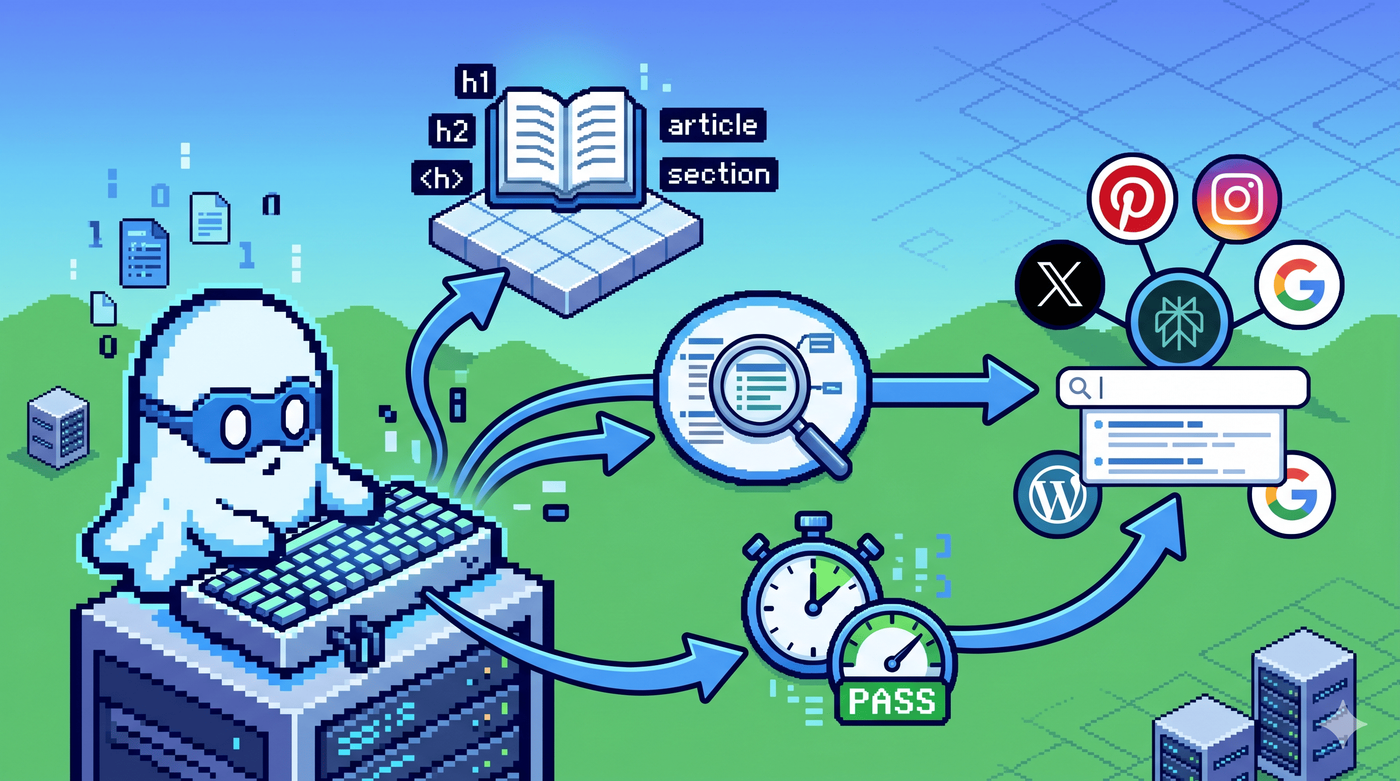
Traditional SEO focused on helping search engines understand your content. Today, AI-powered search engines such as Google AI Overviews, ChatGPT Search, Perplexity, and Gemini are changing how information is discovered and presented.
Instead of simply ranking webpages, these platforms analyze, summarize, and cite content that is well-structured, trustworthy, and easy to understand. This means your website needs to be designed not only for human readers but also for AI systems that extract answers in seconds.
If you want your content to appear in AI-generated responses, website structure is no longer optional it's a competitive advantage.
Our Google AI Mode SEO: How to Optimize Content for Google's Next Generation Search Experience guide explores how AI search is changing modern SEO strategies.

AI Search Website Structure
Why Website Structure Matters for AI Search
AI search engines process websites differently from traditional search engines.
Instead of evaluating only keywords and backlinks, they also examine:
- Content hierarchy
- Semantic HTML
- Structured data
- Internal linking
- Context between pages
- Page performance
A well-structured website makes it easier for AI systems to understand what your content is about and determine whether it should be cited in search results.
Use Semantic HTML Instead of Generic Layouts
Semantic HTML provides meaningful context that helps AI crawlers identify the purpose of each section on your page.
Rather than relying on generic containers, use elements that clearly define your content.
Examples include:
<main><article><section><header><footer><nav>
Every article should include:
- One H1 heading
- Logical H2 and H3 headings
- One
<main>element - One
<article>element
This hierarchy allows AI systems to quickly understand the relationship between headings and supporting content.
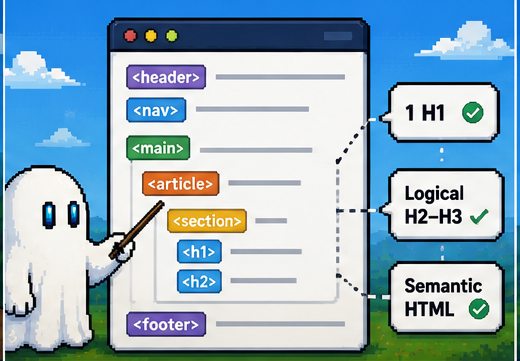
Semantic HTML Structure
Answer Questions Clearly
AI search engines frequently extract short passages that directly answer a user's question.
Instead of writing long introductions, provide a clear answer early in the article.
For example:
❌ Poor example
There are many things to consider when optimizing a website for AI search.
✅ Better example
To improve visibility in AI search, structure each page around one primary question, use semantic HTML, add structured data, and provide a direct answer within the first 100 words.
This approach makes it easier for AI systems to identify and reuse your content.
Traditional SEO vs AI Search Optimization
Traditional SEO | AI Search Optimization |
|---|---|
Optimize for keywords | Optimize for user questions |
Rank pages | Become the cited answer |
Focus on backlinks | Focus on clarity and authority |
Long introductions | Direct answers early |
Individual pages | Connected topic clusters |
Search engine bots | Search engines and AI assistants |
Add Structured Data
Structured data gives AI systems additional information about your content.
Using Schema.org markup helps search engines identify:
- Article title
- Author
- Publication date
- FAQs
- Breadcrumbs
- Reviews
- Products
At minimum, every article should include:
- Article Schema
- BreadcrumbList Schema
- FAQ Schema (when applicable)
Clear metadata improves both discoverability and content understanding.
Build Strong Internal Links
AI doesn't evaluate pages individually.
It explores relationships between pages to understand your expertise.
A website with connected articles appears more authoritative than one with isolated pages.
Every article should link naturally to related content.
For example:
- Beginner SEO Guide
- Technical SEO Checklist
- Keyword Research Guide
Building topic clusters helps both readers and AI systems navigate your website.
Our How to Optimize Your Content for Google AI Overviews: A Complete SEO Guide explains how topical authority influences AI-generated search results.
Improve Page Speed
Fast websites provide a better experience for both users and AI crawlers.
While page speed isn't the only ranking factor, slow-loading pages can reduce crawl efficiency and user engagement.
Focus on improving:
- Largest Contentful Paint (LCP)
- Cumulative Layout Shift (CLS)
- Interaction to Next Paint (INP)
Google's Core Web Vitals documentation provides recommendations for improving website performance and user experience.
Simple improvements include:
- Compressing images
- Reducing JavaScript
- Using browser caching
- Choosing reliable hosting
- Loading fonts efficiently
Best Practices for AI-Friendly Websites
Follow these recommendations to improve your chances of being cited in AI-powered search.
- Use one H1 heading per page.
- Organize content with logical H2 and H3 headings.
- Answer the main question early.
- Add structured data.
- Create topic clusters with internal links.
- Optimize images with descriptive alt text.
- Keep content updated.
- Improve Core Web Vitals.
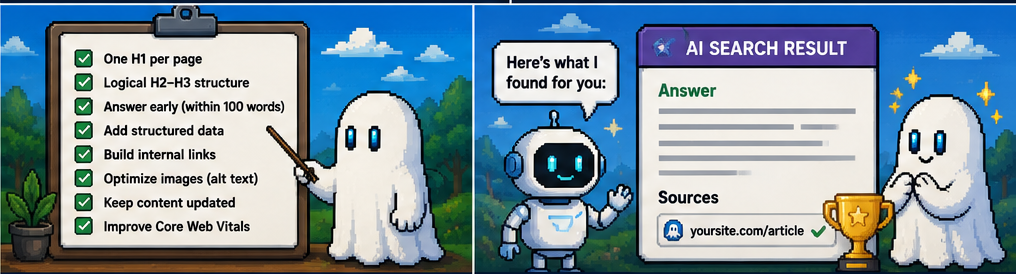
AI SEO Checklist
Frequently Asked Questions
What is AI search optimization?
AI search optimization is the process of structuring content so AI-powered search engines can easily understand, summarize, and reference it in generated answers.
Does semantic HTML improve AI visibility?
Yes. Semantic HTML provides meaningful context that helps AI systems understand page structure and identify important sections.
Is structured data required?
While not mandatory, structured data makes it easier for search engines and AI systems to interpret your content accurately.
How many internal links should a page have?
Aim for two to five relevant internal links that connect related articles and strengthen topical authority.
Will AI search replace traditional SEO?
No. AI search builds on traditional SEO rather than replacing it. Strong technical SEO, quality content, and good website structure remain essential.
Final Thoughts
The future of search is moving toward AI-powered answers, but the fundamentals remain the same: create helpful content, organize it clearly, and make it easy for both people and machines to understand.
A website built with semantic HTML, structured data, strong internal linking, and fast performance is more likely to become a trusted source for AI search engines.
Instead of optimizing only for rankings, start optimizing to become the answer AI chooses to cite.