
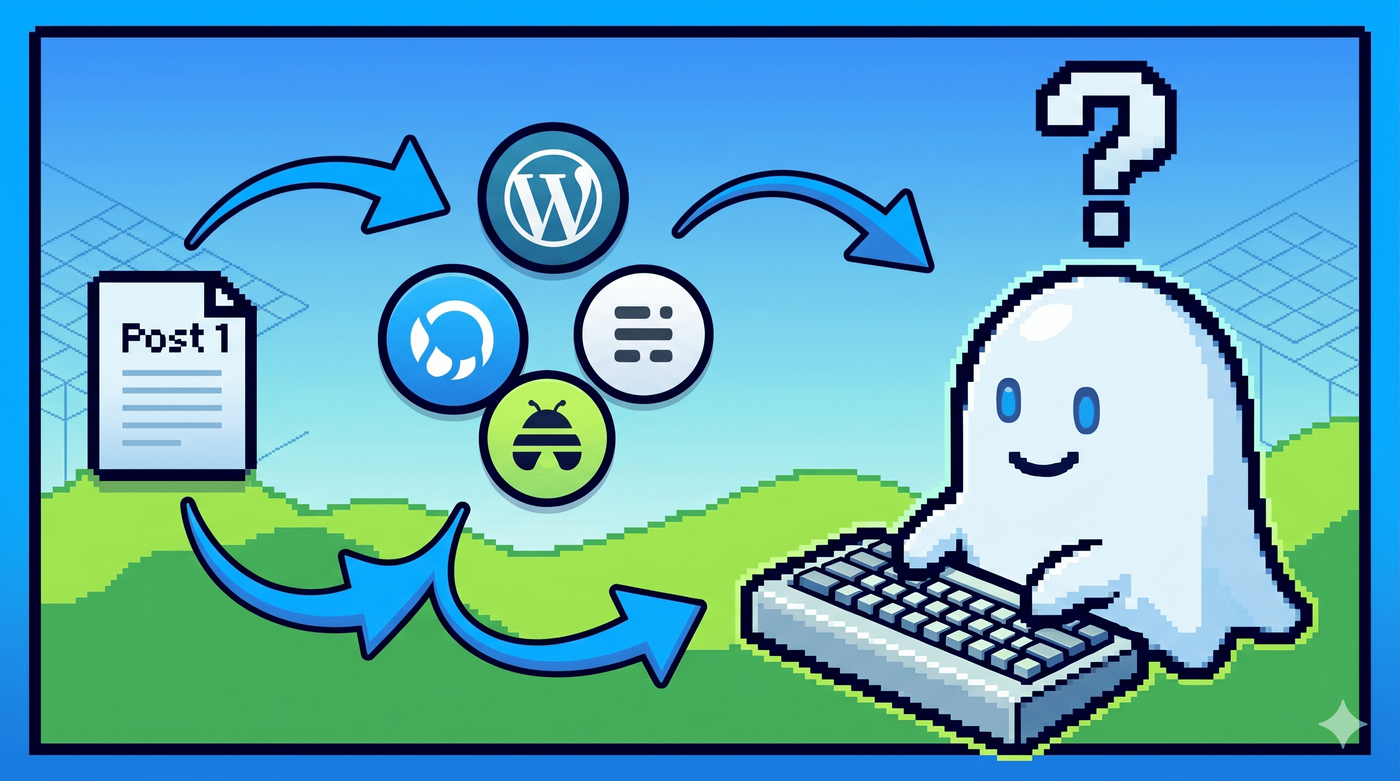
Starting a blog is easier than ever. Writing a blog post that people actually read, share, and discover through search engines is the real challenge.
Many first-time bloggers spend weeks choosing a design, logo, or domain name but only a few hours thinking about the content itself. In reality, your content is what attracts readers, builds trust, and creates long-term traffic.
Your first blog post doesn't need to be perfect. It simply needs to solve a problem better than anything else your audience has already found.
If you're wondering how to turn blogging into a long-term asset, our How to Make Money from Blogging guide explains how consistency and valuable content lead to sustainable growth.
Start Before You Feel Ready
One of the biggest reasons people never build a successful blog is because they wait for the perfect moment.
They wait until they know more.
They wait until their website looks better.
They wait until they feel confident enough.
Successful bloggers don't publish perfect articles. They publish consistently and improve over time.
Your first article is simply the beginning of your learning process. Every post teaches you something about writing, SEO, and your audience.
Instead of asking,
"Is this perfect?"
Ask,
"Will this help someone?"
If the answer is yes, publish it.
Choose a Topic You Can Own
Trying to compete with massive websites on broad topics is difficult.
Instead of writing about:
- Digital Marketing
- Fitness
- Technology
Focus on a specific niche.
Examples include:
- SEO for local businesses
- AI tools for students
- Home workouts for beginners
- Budget travel in Europe
- Personal finance for freelancers
The narrower your niche, the easier it becomes to build authority and attract the right audience.
Before choosing a topic, ask yourself:
- Can I write at least 50 articles about this?
- Who am I helping?
- What problems can I solve?
- Is there enough search demand?
Structure Every Blog Post for Readability
Online readers don't read every word.
They scan.
A well-structured article makes it easier for visitors to find exactly what they need.
Every blog post should include:
- A compelling introduction
- Clear headings
- Short paragraphs
- Bullet points
- Images
- Practical examples
- A conclusion with a clear next step
Breaking your content into sections also improves readability on mobile devices.
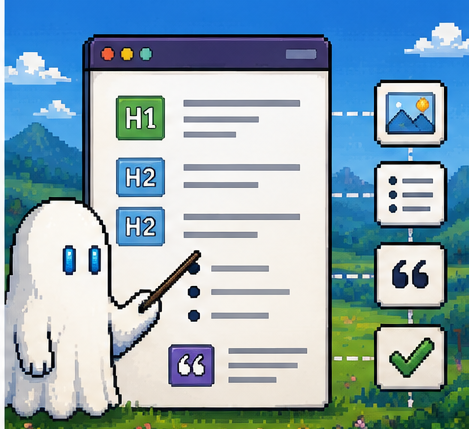
Blog Post Structure
Write for One Reader
One of the most common mistakes new bloggers make is trying to write for everyone.
Instead, imagine writing to one specific person.
Ask yourself:
- What problem are they trying to solve?
- What questions might they have?
- What action should they take after reading?
Writing this way makes your content feel more personal and helpful.
The simpler your language, the easier your article is to understand and remember.
Optimize Your Blog for Search Engines
Creating valuable content is only half the job.
People also need to find it.
Basic SEO helps search engines understand your content while making it easier for readers to discover your articles.
Google's Creating Helpful, Reliable, People-First Content recommends focusing on original, useful content that genuinely helps readers instead of writing only for search engines.
Simple SEO practices include:
- Add your primary keyword to the title.
- Mention it naturally in the introduction.
- Use descriptive headings.
- Write a compelling meta description.
- Add internal links to related articles.
- Optimize images with descriptive alt text.
If you're planning a long-term content strategy, our Why Your First 50 Blog Posts Matter article explains why consistent publishing builds authority over time.
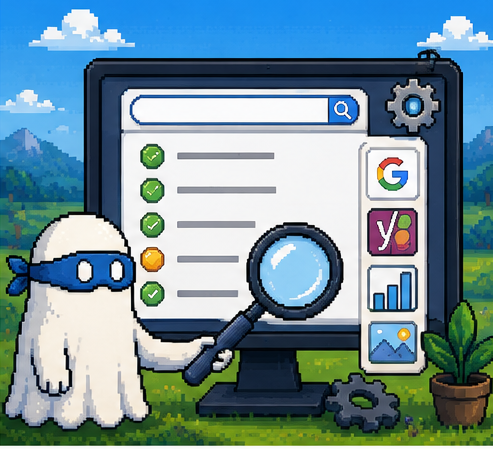
SEO Content Optimization
The First 500 Words Matter Most
Readers decide very quickly whether they'll continue reading.
Your introduction should:
- Explain the problem.
- Tell readers what they'll learn.
- Deliver an early win.
- Encourage them to continue.
Avoid long introductions that delay the useful information.
Answer the reader's biggest question as early as possible.
Promote Every Blog Post
Publishing isn't the finish line.
It's the starting point.
Once your article is live, share it across multiple channels:
- X (Twitter)
- Email newsletters
- Online communities
You can also repurpose your article into:
- Short videos
- Infographics
- LinkedIn posts
- Carousels
- Email newsletters
One article can become multiple pieces of content.
Consistency Beats Perfection
Many successful blogs weren't built with one viral article.
They were built by publishing consistently.
Choose a schedule you can realistically maintain.
For example:
- One article every week
- Two articles every month
- One high-quality guide every month
Consistency builds trust with readers while giving search engines more opportunities to discover your content.
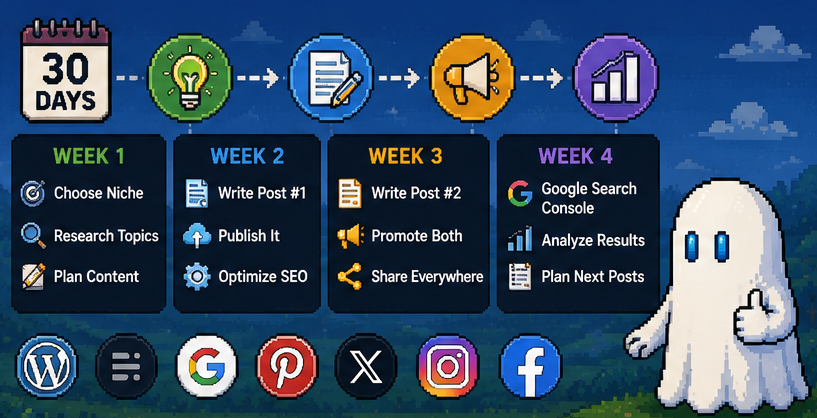
Publishing Consistently
Simple 30-Day Blogging Plan
Week 1
- Choose your niche.
- Research five article ideas.
- Create a publishing schedule.
Week 2
- Write your first article.
- Publish it.
Week 3
- Write your second article.
- Share both articles on social media.
Week 4
- Set up Google Search Console to monitor your website's performance.
- Review which topics receive the most impressions.
- Plan your next four articles.
Frequently Asked Questions
How long should my first blog post be?
Aim for 1,000–2,000 words if you're writing a detailed guide. Focus on answering the reader's question completely rather than reaching a specific word count.
Do I need SEO for my first blog post?
Yes. Even basic SEO helps search engines understand your content and increases your chances of attracting organic traffic over time.
How often should I publish?
Choose a schedule you can maintain consistently. Publishing one quality article every week is generally more effective than publishing several articles at once and then stopping.
Can I make money from my first blog?
Probably not immediately. Most blogs require consistent publishing before they generate meaningful traffic and income. Focus on creating valuable content first, then monetize as your audience grows.
What's the biggest mistake new bloggers make?
Waiting too long to publish. Your first article won't be perfect, but every published post helps you improve, build authority, and attract future readers.
Final Thoughts
Every successful blog started with a single published article.
You don't need a perfect website, expensive tools, or years of experience to begin. You need a clear topic, a helpful mindset, and the willingness to publish consistently.
Your first blog post is the foundation of everything that follows. Write it, publish it, learn from it, and then start working on the next one.
The sooner you begin, the sooner your content can start attracting readers, building authority, and creating opportunities that continue to grow over time.