

All in One SEO (AIOSEO) Integration & Optimization
Before configuring All in One SEO, make sure your WordPress site is connected to Ghost.blog. If you haven't connected it yet, follow Connect Your WordPress Site first.
Once your WordPress site is connected, Ghost.blog can integrate with All in One SEO (AIOSEO) to analyse generated articles, identify SEO issues, and help optimize your content before publishing.
Note: If All in One SEO is already installed and active on your WordPress website, you can skip this step.
Step 1: Install and Activate All in One SEO on WordPress
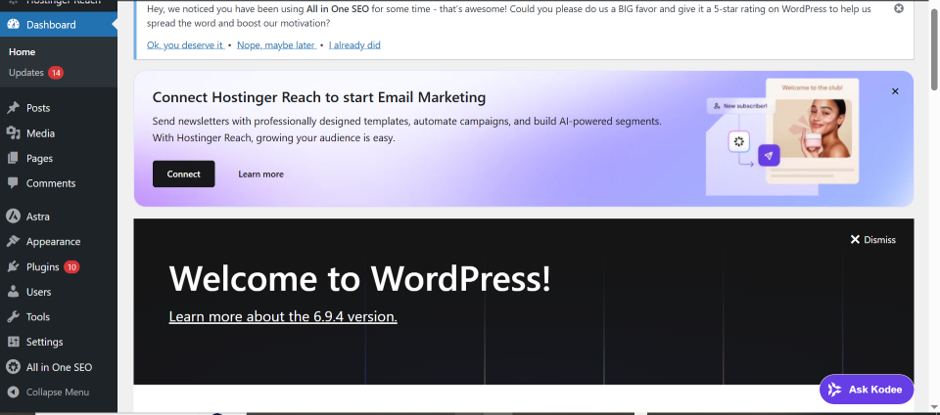
Log in to your WordPress Admin Dashboard.
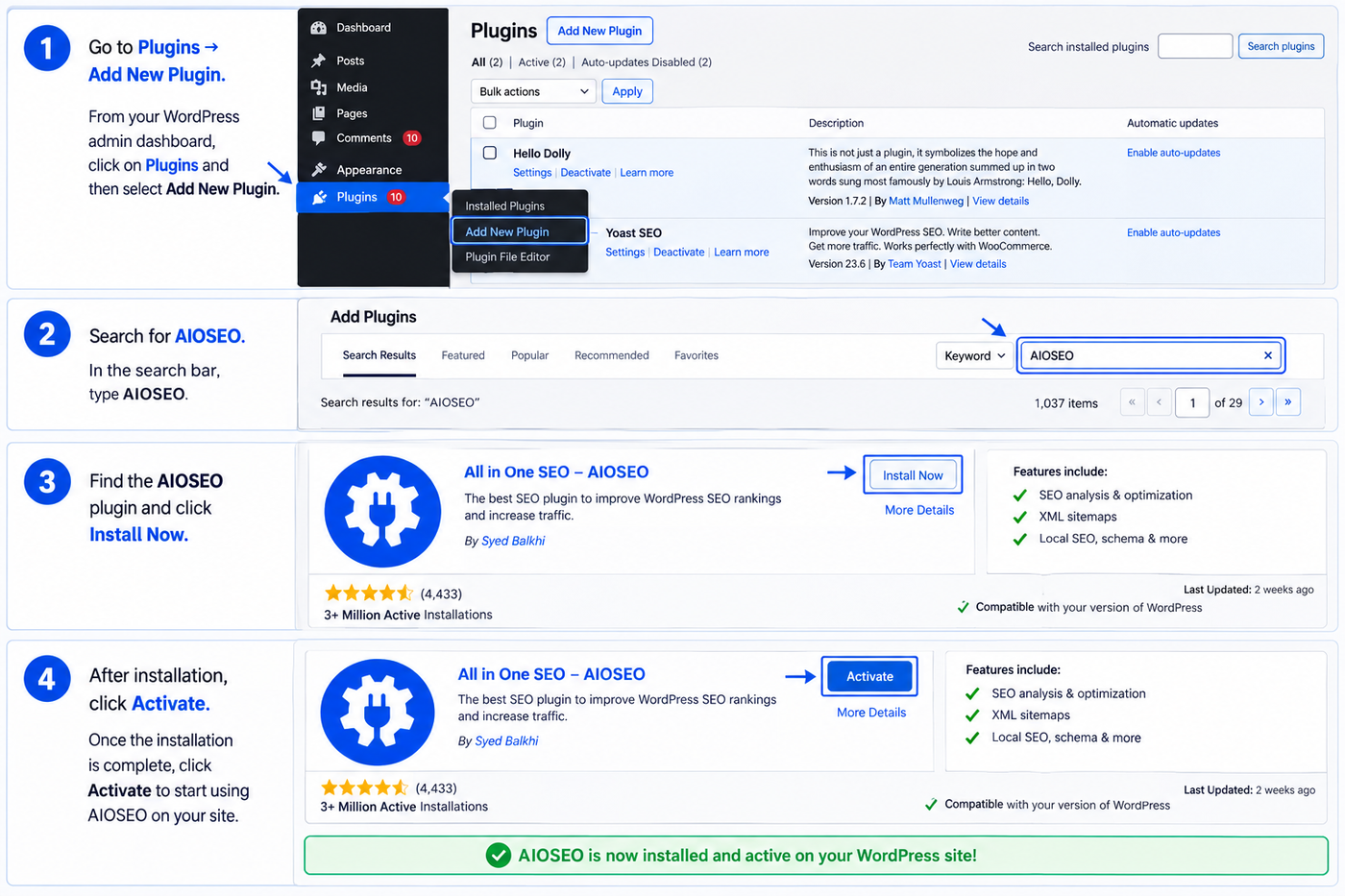
- From the left sidebar, go to Plugins → Add New Plugin.
- In the search bar, search for All in One SEO.
- Find the official All in One SEO (AIOSEO) plugin and click Install Now.
- Once the installation is complete, click Activate.
Note: If All in One SEO is already installed and active on your WordPress website, you can skip these steps.
Step 2: Connect All in One SEO
- Go to Brand Profile → Integrations.
- Under SEO Connector, ensure your WordPress site is connected.
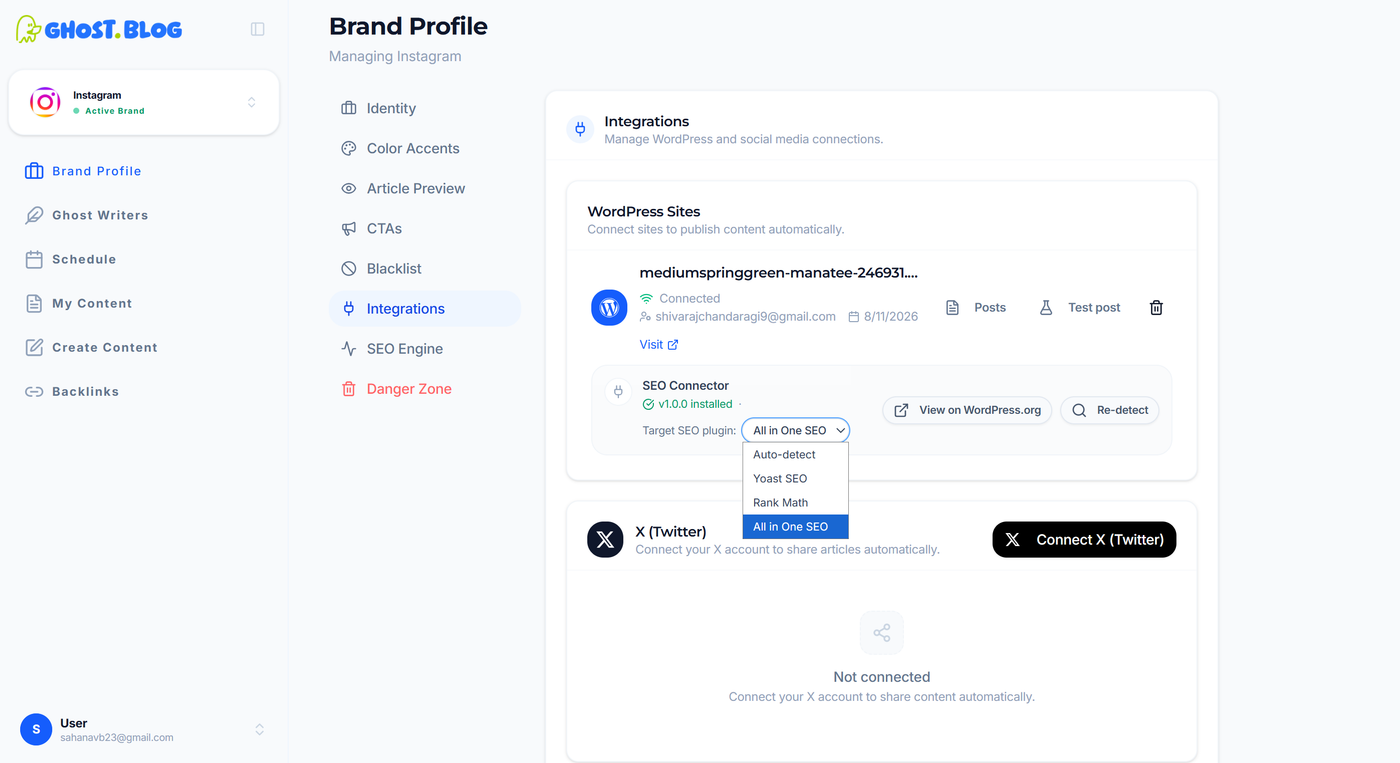
- From the Target SEO Plugin dropdown, select All in One SEO.
Step 3: Select the Default SEO Engine
- Navigate to Brand Profile → SEO Engine.
- Under Default SEO Plugin, select All in One SEO.
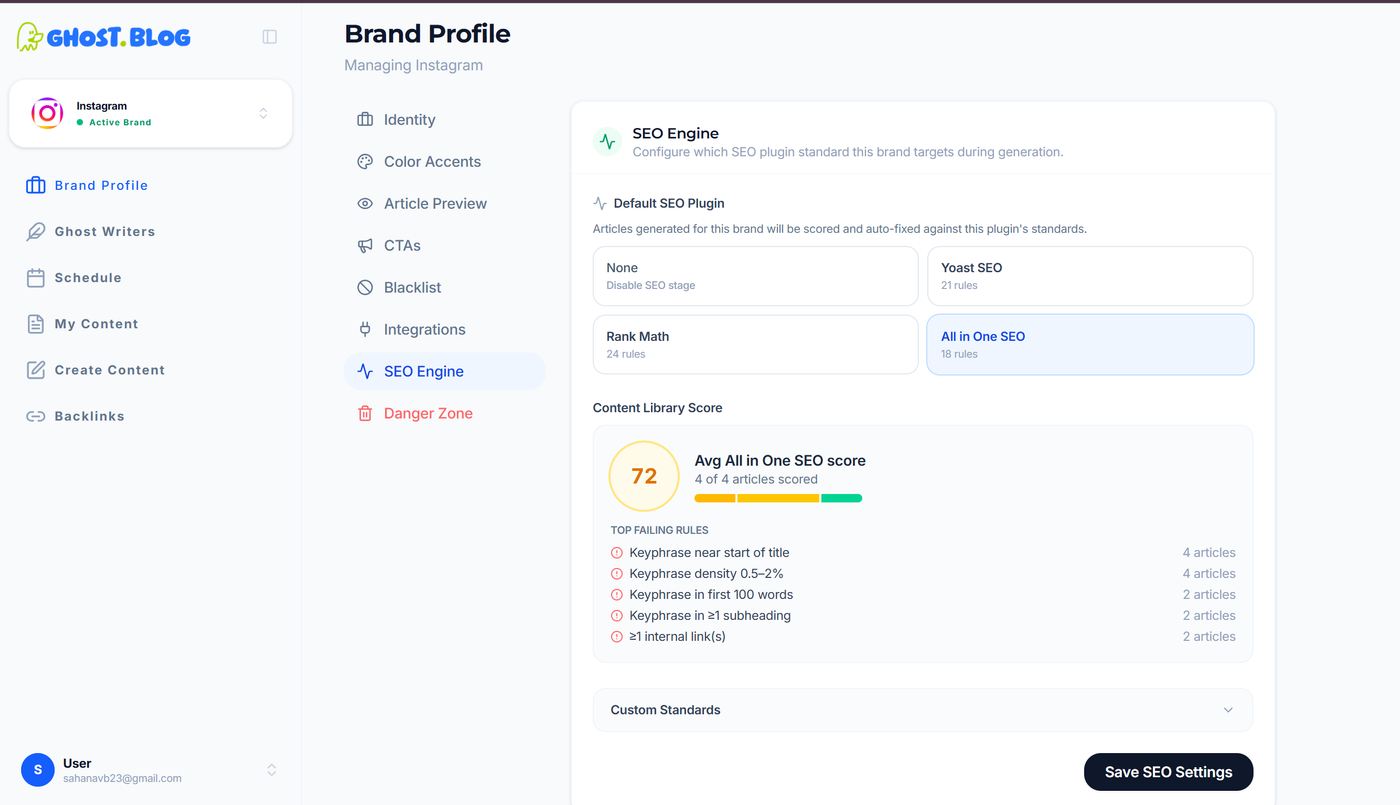
- Click Save SEO Settings to apply your selection.
- Once the SEO engine is selected, the Content Library Score section will display the overall SEO score for your content based on the selected plugin. It also shows the average SEO score, the number of articles analysed, and the top failing SEO rules, helping you identify areas for improvement across your content library.
All newly generated articles will be scored and automatically optimized according to the selected SEO engine.
Step 4: Review and Fix the SEO Variables

- Go to My Content from the dashboard.
- Open one of the generated articles.
- Scroll down to the SEO Analytics section.
- Select All in One SEO (AIOSEO).
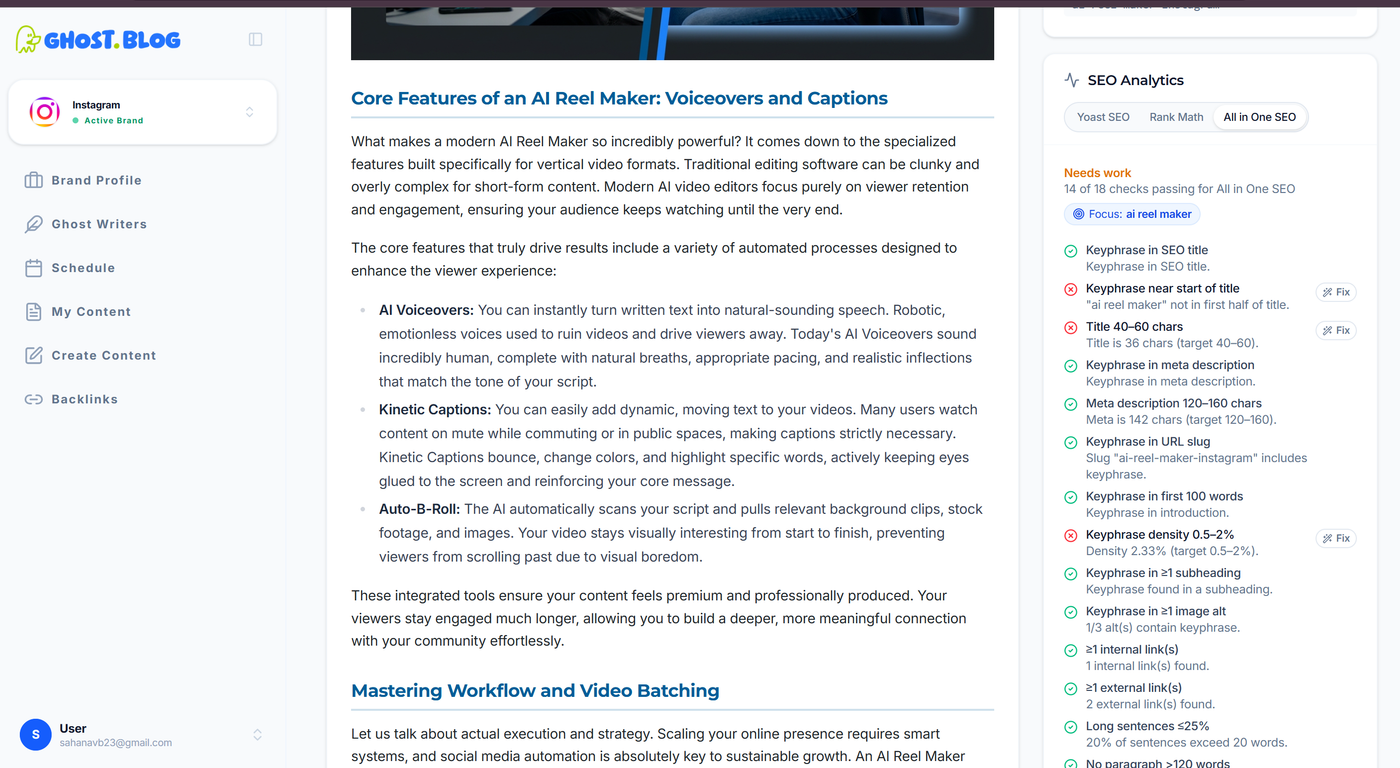
- The selected plugin will display all of its SEO variables along with their pass/fail status. For example:
- Yoast SEO: 21 SEO checks
- Rank Math: 24 SEO checks
- All in One SEO: 18 SEO checks
When you've selected All in One SEO (AIOSEO) as your default SEO engine, Ghost.blog analyses every generated article against 18 key SEO best practices. Each check is marked as Passed, Needs Improvement, or Failed, helping you understand which areas of your content can be improved before publishing.
- Continue scrolling to the bottom of the analysis to review any failed checks.
- Click Fix All Failing Rules to automatically optimize the content based on the selected plugin's recommendations.
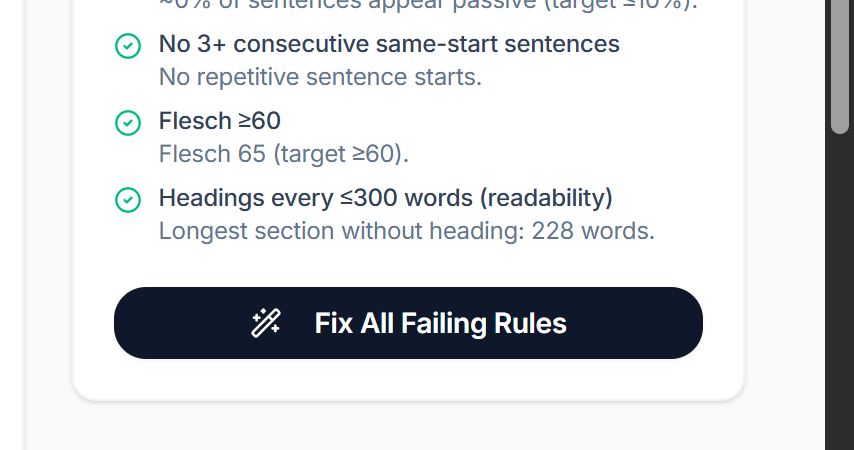
- Once the fixes are applied, re-run the SEO analysis to verify that the article passes more SEO checks and achieves a higher SEO score.
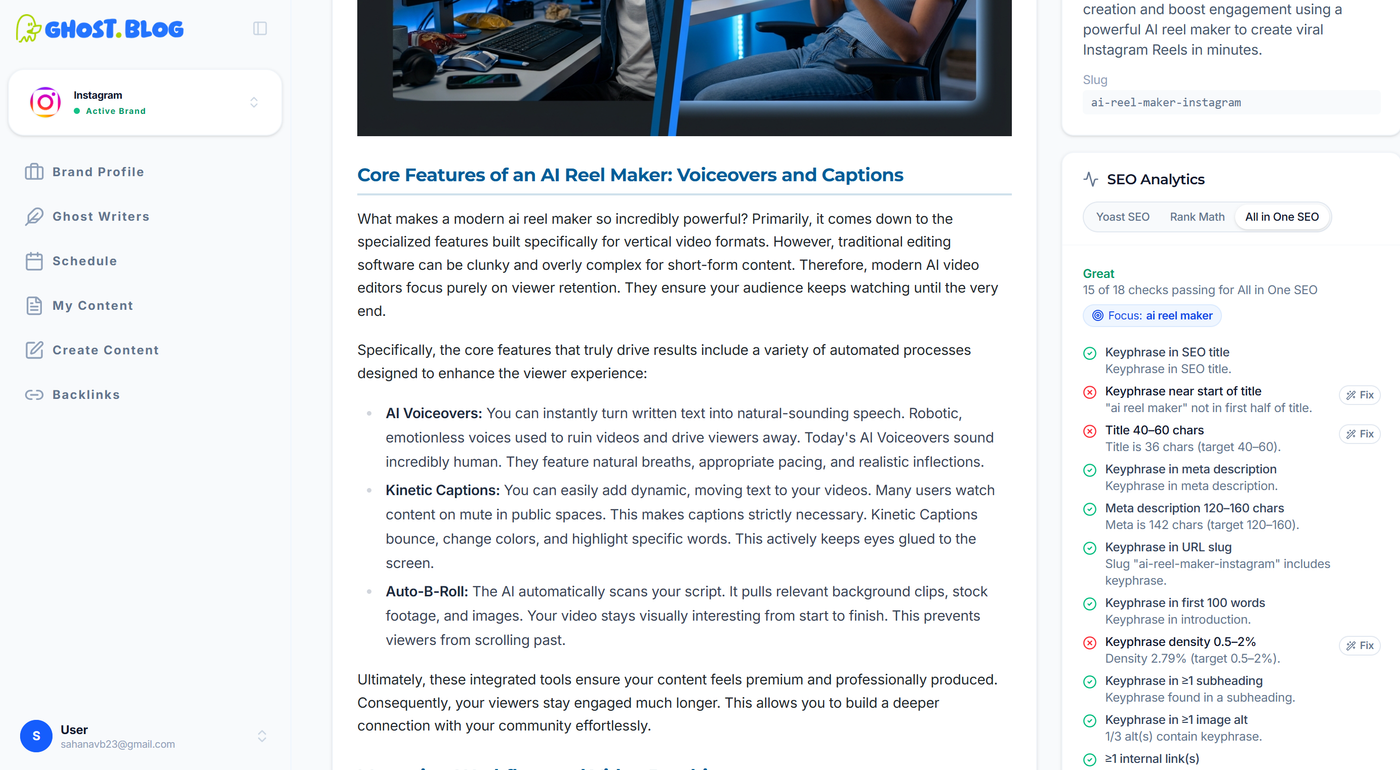
This process helps ensure that each generated article is optimised according to the SEO plugin's recommendations before it is published.
Understanding the All in One SEO (AIOSEO) Checks
AIOSEO Check | What it checks |
|---|---|
SEO Title | Ensures the SEO title is optimised, the correct length, and includes the focus keyword. |
Meta Description | Checks that the meta description is descriptive, within the recommended length, and contains the focus keyword. |
Focus Keyword Usage | Verifies that the primary keyword is used naturally throughout the content. |
Keyword in Introduction | Confirms the focus keyword appears in the opening paragraph. |
Keyword Density | Ensures the keyword is used an appropriate number of times without keyword stuffing. |
URL Slug | Checks that the page URL is short, descriptive, and includes the focus keyword where appropriate. |
Heading Structure | Verifies that headings follow a logical hierarchy (H1, H2, H3, etc.). |
Keyword in Headings | Ensures the focus keyword appears in one or more headings or subheadings. |
Content Length | Confirms the article contains sufficient content to cover the topic effectively. |
Internal Links | Checks that the article links to relevant pages within your website. |
External Links | Verifies that the content includes links to relevant and authoritative external resources. |
Image Alt Text | Ensures all images include descriptive alt text for accessibility and SEO. |
Image SEO | Reviews image optimisation, including filenames and image relevance where applicable. |
Readability | Measures how easy the content is to read and understand. |
Paragraph Length | Recommends shorter paragraphs to improve readability and user experience. |
Sentence Length | Flags overly long sentences that may reduce clarity. |
Passive Voice | Detects excessive use of passive voice and recommends more active writing. |
Overall SEO Score | Combines the results of all checks into an overall SEO score that reflects how well the article is optimised. |
How the Algorithm Works
The SEO algorithm evaluates every generated article against the standards of the selected SEO plugin (Yoast SEO, Rank Math, or All in One SEO). Each plugin has its own set of SEO rules and best practices.
Workflow
- Select an SEO Engine
- Choose Yoast SEO, Rank Math, or All in One SEO as the default SEO engine.
- Generate Content
- The AI generates the article based on the provided topic and requirements.
- Run SEO Analysis
- The selected SEO engine analyses the article against its predefined SEO rules.
- Yoast SEO evaluates 21 rules.
- Rank Math evaluates 24 rules.
- All in One SEO evaluates 18 rules.
- Score the Content
- Each rule is marked as Passed or Failed.
- The overall SEO score is calculated based on the number of rules that pass.
- Provide Recommendations
- Failed rules are highlighted with clear suggestions, such as improving the title, adjusting keyword placement, adding internal links, or optimising image alt text.
- Auto-Fix SEO Issues
- Users can click Fix or Fix All Failing Rules to automatically optimise the article based on the selected SEO plugin's recommendations.
- Re-evaluate the Content
- After the changes are applied, the SEO engine analyses the article again and updates the score until the content meets the recommended SEO standards.
How People Can Benefit
Using the SEO integration helps users create high-quality, search engine–friendly content with minimal manual effort.
Improved Search Rankings
Content is optimised according to industry-recognised SEO standards, increasing the likelihood of better visibility in search engine results.
Better Content Quality
The SEO engine evaluates key elements such as keyword placement, headings, links, readability, metadata, and content structure, resulting in more comprehensive and user-friendly articles.
Faster Optimisation
Instead of manually reviewing every SEO rule, users can automatically fix failing checks using the built-in optimisation tools.
Flexible SEO Standards
Users can choose between Yoast SEO, Rank Math, or All in One SEO, allowing them to follow the SEO guidelines that best match their website and workflow.
Consistent Content Performance
Every generated article is analysed using the same set of SEO standards, ensuring consistent quality across the entire content library.
Content Library Insights
The Content Library Score provides an overview of average SEO performance and highlights the most common failing rules, helping users identify trends and continuously improve future content.
Time Savings
By combining AI-generated content with automated SEO analysis and optimisation, users can publish high-quality, SEO-ready articles much faster while reducing manual editing.